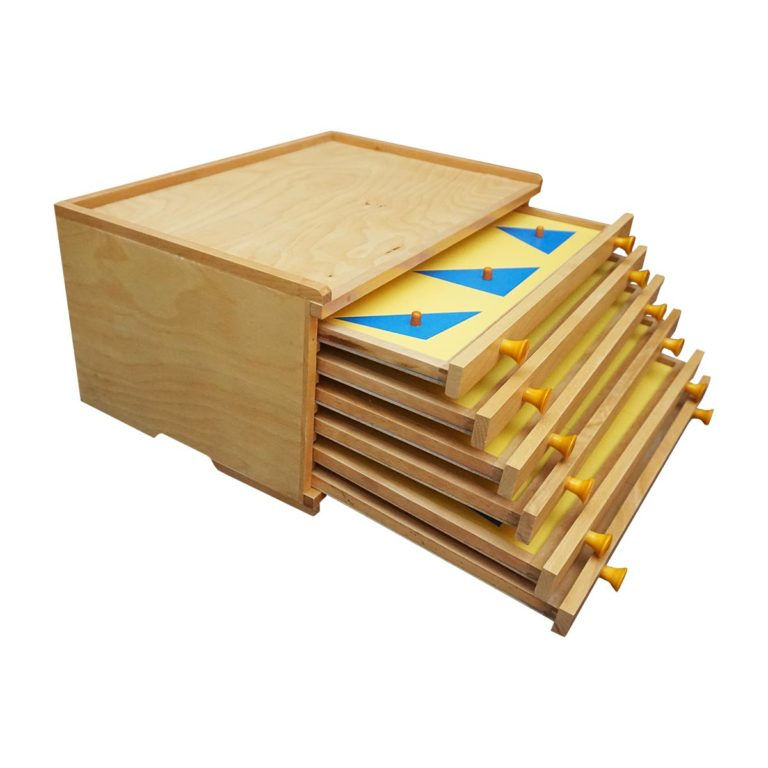
Description :- The Spindle Boxes are an essential Montessori material used to teach young children the basic concepts of counting, quantity, and number recognition. The boxes are made from high-quality beech wood, known for its beautiful grain, even texture, and durability. The compartments are neatly crafted using finger-jointing, which ensures the boxes are strong and long-lasting. The Spindle Boxes consist of two wooden boxes:
Box 1: This box contains five compartments numbered from 0 to 4.
Box 2: This box contains five compartments numbered from 5 to 9.
Accompanying the boxes are 45 wooden spindles (small, rounded sticks), which children will use to understand the relationship between quantity and numeral.
Spindle Boxes
SKU: KM5
₹2,650.00Price
Excluding Taxes
No Reviews YetShare your thoughts.
Be the first to leave a review.